Epidermoid Cysts and Mole-Like Bumps on the Face
Not every bump on the face is a mole. Epidermoid cysts, skin tags, seborrheic keratoses, and other benign skin lesions can sometimes resemble moles, making self-diagnosis difficult. Korean dermatology clinics use clinical examination and advanced diagnostic techniques to accurately identify facial bumps and recommend the most appropriate treatment.

Epidermoid Cysts and Mole-Like Bumps on the Face
Discovering a new bump on your face can be concerning, especially when it resembles a mole. While many people assume every facial bump is a mole, several different skin conditions can produce similar appearances.
One of the most commonly mistaken lesions is an epidermoid cyst. These cysts often appear as small, flesh-colored bumps beneath the skin and can sometimes be confused with raised moles or other benign growths.
Understanding the differences between epidermoid cysts and mole-like bumps can help patients know when to seek professional evaluation and what treatment options may be available.
What Is an Epidermoid Cyst?
An epidermoid cyst is a benign, slow-growing sac located beneath the skin.
The cyst contains:
- Keratin
- Dead skin cells
- Protein-rich material
These cysts develop when skin cells become trapped beneath the surface rather than shedding normally.
Epidermoid cysts are non-cancerous and commonly occur on the face, neck, scalp, and upper body.
What Does an Epidermoid Cyst Look Like?
Epidermoid cysts often appear as:
- Small round bumps
- Flesh-colored nodules
- Firm but movable lumps
- Smooth surface lesions
- Slowly enlarging bumps
Some cysts may have a visible central pore or tiny opening on the surface.
Unlike many moles, epidermoid cysts typically develop beneath the skin rather than within the pigment-producing layer.
What Is a Mole?
A mole, or nevus, is a collection of melanocytes, the cells responsible for producing skin pigment.
Moles may be:
- Flat
- Raised
- Brown
- Black
- Pink
- Flesh-colored
Most moles remain stable and harmless throughout life.
Epidermoid Cyst vs Mole: Key Differences
Location Within the Skin
Epidermoid Cyst
Develops beneath the skin surface.
Mole
Develops within pigment-producing skin cells.
Texture
Epidermoid Cyst
Often feels:
- Firm
- Rounded
- Mobile beneath the skin
Mole
Usually feels:
- Smooth
- Soft or firm
- Fixed to the skin surface
Appearance
Epidermoid Cyst
Typically:
- Flesh-colored
- Dome-shaped
- Uniform in appearance
Mole
May be:
- Pigmented
- Flat or raised
- Variable in color
Growth Pattern
Epidermoid Cyst
Often enlarges slowly over time.
Mole
Usually remains relatively stable once fully developed.
Other Mole-Like Facial Bumps
Not every facial bump is a mole or cyst.
Other possibilities include:
Seborrheic Keratosis
A benign growth with a waxy, "stuck-on" appearance.
Skin Tags
Soft growths attached by a narrow stalk.
Fibrous Papules
Small, firm bumps commonly found on the nose.
Milia
Tiny white cysts that form beneath the skin surface.
Sebaceous Hyperplasia
Enlarged oil glands that create small yellowish bumps.
Intradermal Nevi
Raised flesh-colored moles that can resemble cysts.
Professional evaluation is often necessary to distinguish among these conditions.
Why Do Epidermoid Cysts Develop?
Several factors may contribute to cyst formation.
Trapped Skin Cells
The most common cause is blockage of normal skin cell shedding.
Skin Trauma
Previous injury may increase the likelihood of cyst development.
Genetics
Some individuals naturally develop cysts more frequently.
Acne-Prone Skin
Certain skin conditions may contribute to blocked follicles and cyst formation.
Can Epidermoid Cysts Become Dangerous?
Most epidermoid cysts are harmless.
However, complications can occur if a cyst:
- Becomes inflamed
- Becomes infected
- Ruptures
- Enlarges significantly
Signs of inflammation may include:
- Redness
- Tenderness
- Swelling
- Drainage
These symptoms should be evaluated by a dermatologist.
Can Epidermoid Cysts Turn Into Cancer?
Malignant transformation is extremely rare.
Most epidermoid cysts remain completely benign.
Nevertheless, any rapidly changing lesion should be professionally assessed to confirm the diagnosis.
How Dermatologists Diagnose Facial Bumps
Clinical Examination
The dermatologist evaluates the lesion's appearance and texture.
Dermoscopy
A dermatoscope allows detailed visualization of skin structures.
Palpation
The dermatologist may gently examine how the lesion feels beneath the skin.
Ultrasound or Imaging
Occasionally used for larger or deeper lesions.
Biopsy
Performed when the diagnosis remains uncertain or if suspicious features are present.
Treatment Options for Epidermoid Cysts
Observation
Small asymptomatic cysts may not require treatment.
Cyst Removal
Complete surgical removal provides the most definitive treatment.
Drainage
In selected cases, drainage may temporarily relieve symptoms.
Treatment of Inflammation
Inflamed cysts may require medical management before removal.
Treatment Options for Moles
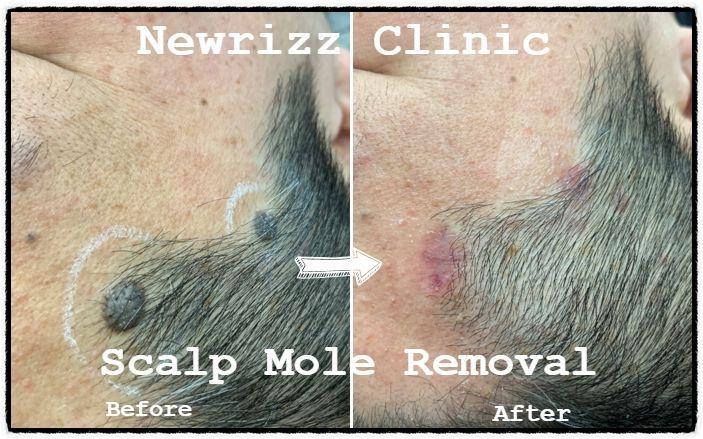
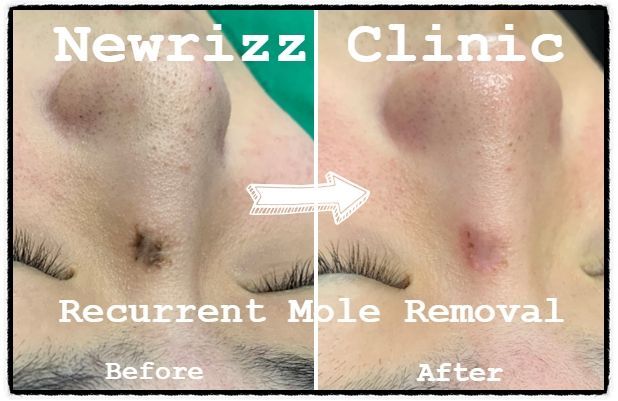
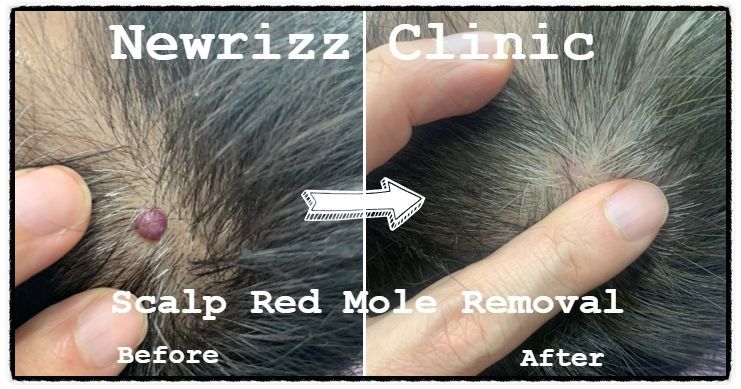
Laser Mole Removal
Often used for superficial or cosmetic moles.
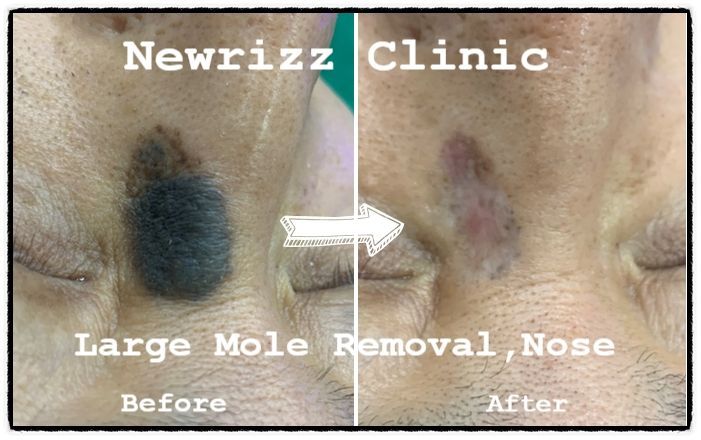
CO2 Laser Removal
Frequently recommended for raised lesions.
Surgical Excision
Appropriate for large, deep, or suspicious moles.
The treatment approach depends entirely on the diagnosis.
When Should You See a Dermatologist?
Schedule an evaluation if a facial bump:
- Continues growing
- Changes color
- Becomes painful
- Bleeds
- Becomes inflamed
- Develops irregular borders
- Appears suddenly and enlarges rapidly
Accurate diagnosis is essential before treatment.
Why Patients Choose Korean Dermatology Clinics
Korean dermatology clinics are known for:
- Advanced diagnostic technology
- Expertise in facial skin lesions
- Accurate differentiation of cysts and moles
- Cosmetic-focused treatment planning
- Scar-minimization techniques
- Foreigner-friendly services
Many patients seek professional evaluation before pursuing cosmetic removal.
Final Thoughts
Epidermoid cysts and mole-like facial bumps can appear similar, but they are different conditions that require different treatment approaches. While epidermoid cysts develop beneath the skin and contain keratin-filled material, moles arise from pigment-producing cells within the skin.
Because many facial lesions can mimic one another, professional evaluation by a dermatologist is the best way to obtain an accurate diagnosis and determine whether treatment is necessary. Early assessment helps ensure both optimal skin health and the best cosmetic outcome.