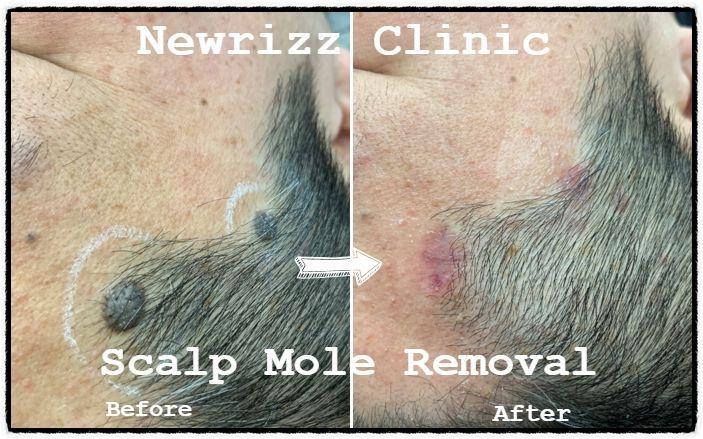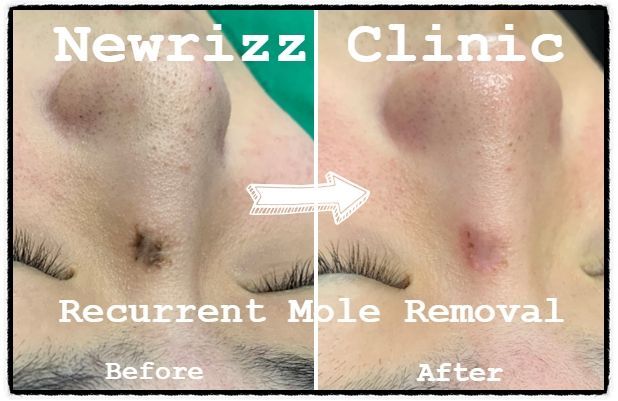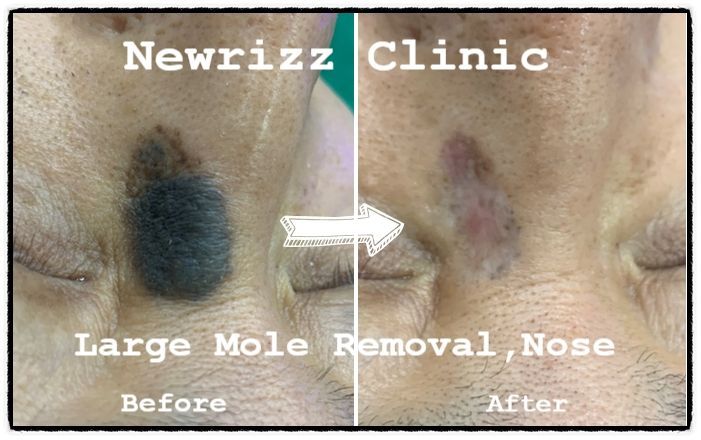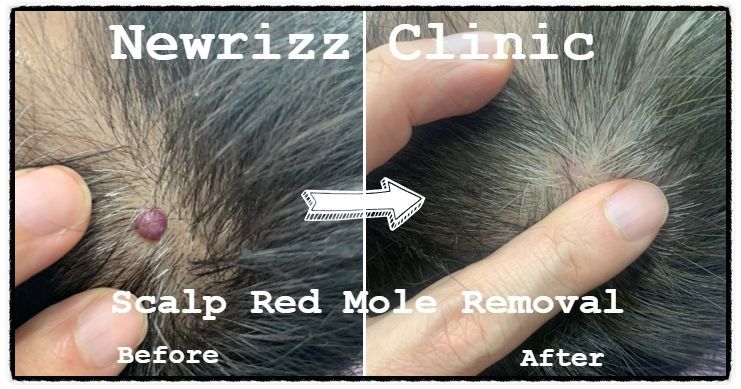
Large Mole Removal Korea |
Jamsil NewRizz Skin Clinic
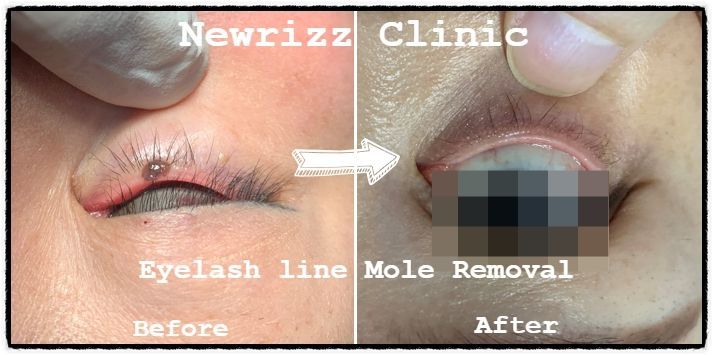
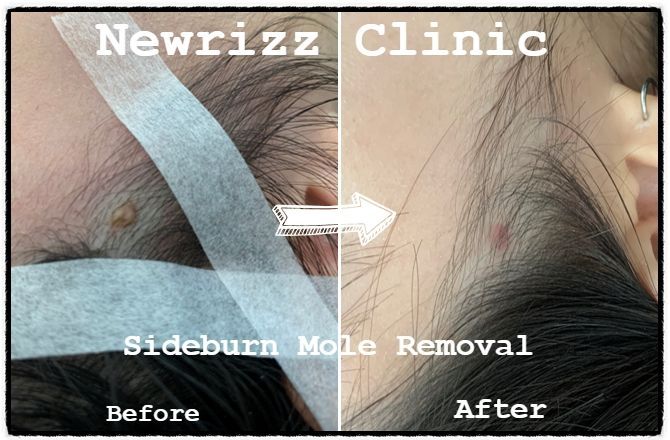
Large mole removal in Korea is a specialized dermatology and skin surgery procedure designed to safely remove large, deep, raised, congenital, or cosmetically significant moles while achieving the best possible cosmetic outcome. At NewRizz Skin Clinic, large moles are carefully evaluated based on their size, depth, location, pigmentation, and medical characteristics before selecting the most appropriate treatment method. Depending on the lesion, treatment may involve surgical excision, shave excision, laser-assisted treatment, or a combination approach. Larger and deeper moles often require surgical removal to achieve complete excision and allow pathological examination when necessary.
What Is Considered a Large Mole?
A large mole is generally a mole that is significantly larger than common acquired moles or extends deeper into the skin layers.
Large moles may include:
- Large congenital moles
- Deep intradermal nevi
- Large compound nevi
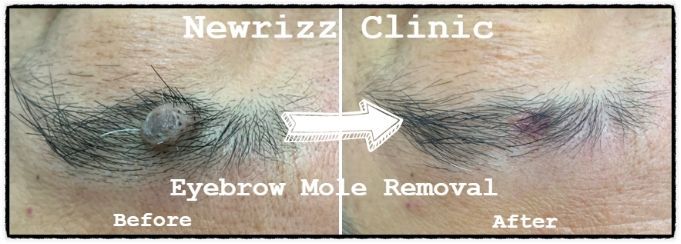
- Raised facial moles
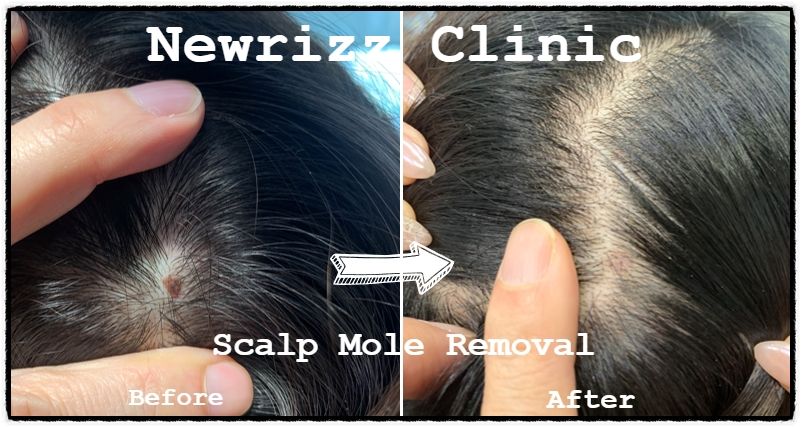
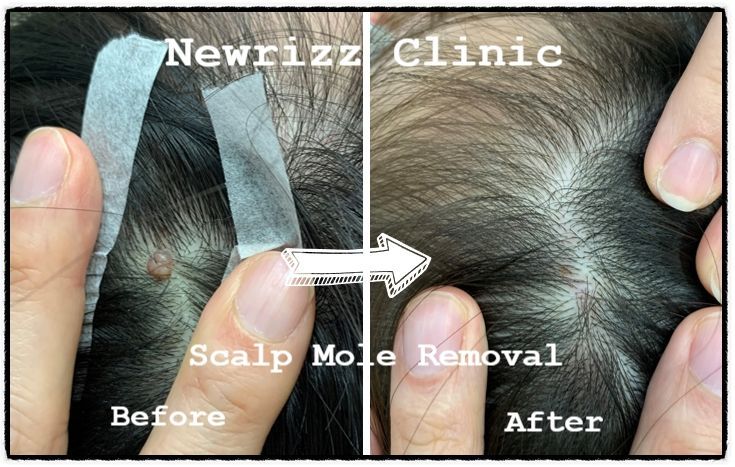
- Scalp moles
- Hair-bearing moles
- Large pigmented lesions
- Long-standing enlarging moles
Large moles often require a different treatment approach than small superficial moles because they frequently extend deeper into the dermis.
Why Remove a Large Mole?
Patients choose large mole removal for several reasons.
Common motivations include:
- Cosmetic improvement
- Facial symmetry enhancement
- Repeated irritation
- Shaving difficulties
- Frequent trauma
- Bleeding episodes
- Hair growth within the mole
- Clothing friction
- Medical evaluation
- Pathology assessment when indicated
Many patients seek treatment because large moles become a prominent facial feature and affect confidence.
Common Areas Treated
Face
Large facial moles commonly occur on:
- Nose
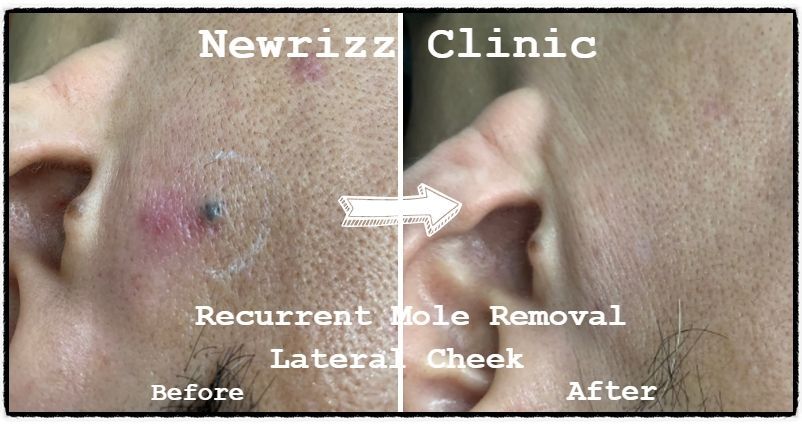
- Cheeks
- Forehead
- Chin
- Jawline
- Temple area
Scalp
Scalp moles are often hidden by hair but may become irritated during brushing, haircuts, or styling.
Neck
Raised neck moles frequently catch on clothing and jewelry.
Body
Large moles may develop on:
- Chest
- Back
- Shoulders
- Arms
- Abdomen
- Legs
Types of Large Moles
Large Intradermal Moles
These moles commonly appear:
- Raised
- Flesh-colored or brown
- Dome-shaped
- Hair-bearing
Large Compound Moles
Features include:
- Partial elevation
- Pigmentation
- Well-defined borders
Congenital Moles
Congenital moles are present at birth or appear shortly afterward. Larger congenital nevi often require individualized treatment planning. Surgical excision is commonly considered the standard treatment for larger congenital nevi.
Deep Pigmented Moles
Some large moles extend deeply beneath the skin surface and require more advanced surgical techniques for complete removal.
How Large Moles Are Evaluated
At NewRizz Skin Clinic, every large mole undergoes detailed assessment before treatment.
Evaluation may include:
- Clinical examination
- Mole size measurement
- Depth assessment
- Pigmentation evaluation
- Border analysis
- Medical history review
- Treatment planning
- Pathology consideration
Certain lesions may require biopsy or complete excision to obtain a definitive diagnosis.
Large Mole Removal Methods
Surgical Excision
Surgical excision is one of the most commonly recommended treatments for large moles.
Benefits include:
- Complete removal
- Lower recurrence risk
- Pathology testing when needed
- Suitable for deep lesions
- Effective for large moles
During the procedure, the mole and a small margin of surrounding skin are removed under local anesthesia before the area is closed with sutures. Surgical excision is frequently recommended for larger or deeper lesions.
Shave Excision
Selected raised large moles may be treated using shave excision.
Benefits include:
- No stitches in many cases
- Fast treatment
- Short recovery
- Good cosmetic outcomes
Shave excision is often most suitable for protruding benign moles. However, recurrence rates may be higher when deeper mole cells remain.
Laser-Assisted Treatment
Laser treatment may be appropriate for selected superficial pigmented components or cosmetic refinement, although lasers are generally not considered the primary treatment for many deep large moles. Deep lesions often extend beyond the depth reached by laser treatment.
Will Large Mole Removal Leave a Scar?
Any procedure that removes a large mole may leave some degree of scarring.
Factors affecting scar appearance include:
- Mole size
- Mole depth
- Treatment method
- Body location
- Skin type
- Healing characteristics
Modern dermatologic and surgical techniques focus on minimizing visible scarring while achieving complete removal.
Recovery After Large Mole Removal
Recovery depends on:
- Lesion size
- Treatment method
- Body location
- Individual healing response
Patients may experience:
- Mild swelling
- Temporary redness
- Bruising
- Sutures when applicable
- Temporary tenderness
- Gradual scar maturation
Most patients resume normal activities shortly after treatment, although healing continues for several weeks.
Can Large Moles Grow Back?
Recurrence depends on the removal method and depth of the mole.
Factors influencing recurrence include:
- Incomplete removal
- Mole depth
- Treatment technique
- Residual mole cells
Surgical excision generally provides the lowest recurrence rate because the entire lesion is removed.
Large Mole Removal for International Patients
Many international patients travel to Korea for cosmetic mole removal because of advanced dermatologic techniques and efficient treatment scheduling.
NewRizz Skin Clinic welcomes patients seeking:
- Large facial mole removal
- Scalp mole removal
- Congenital mole treatment
- Cosmetic mole excision
- Multiple mole removal
- Scar-conscious mole surgery
Many patients can receive consultation and treatment during the same trip depending on the treatment plan.
Why Choose NewRizz Skin Clinic?
NewRizz Skin Clinic provides advanced large mole removal with a focus on safety, precision, and cosmetic excellence.
Patients benefit from:
- Expert mole assessment
- Surgical excision expertise
- Advanced dermatology technology
- Personalized treatment plans
- Scar-conscious techniques
- Pathology coordination when needed
- International patient support
- Modern dermatology care in Korea
Frequently Asked Questions
What is considered a large mole?
A large mole is generally a mole that is significantly larger, deeper, or more prominent than common acquired moles and often requires specialized treatment planning.
What is the best treatment for a large mole?
Surgical excision is commonly recommended for large or deep moles because it allows complete removal and pathology evaluation when needed.
Can large moles be removed with a laser?
Some superficial components may respond to laser treatment, but many large moles extend deeper into the skin and may require surgical removal.
Will I need stitches after large mole removal?
Many surgical excisions require sutures, while some shave excision procedures do not.
Is large mole removal painful?
Local anesthesia is typically used to maximize patient comfort during treatment.
Can large moles be tested for cancer?
Yes. Surgically removed tissue can be submitted for pathology examination when medically indicated.
Will a large mole leave a scar after removal?
Some degree of scarring is expected with most large mole removals, although treatment focuses on achieving the best cosmetic outcome.
How long does healing take?
Initial healing typically occurs over several weeks, while scar maturation may continue for several months.
Can congenital moles be removed?
Yes. Many congenital moles can be treated surgically depending on size, depth, and location.
Can international patients receive consultation and treatment during the same trip?
Yes. Many overseas patients complete consultation and treatment during a single visit to Korea.