Hairy Mole Removal Seoul |
Jamsil NewRizz Skin Clinic
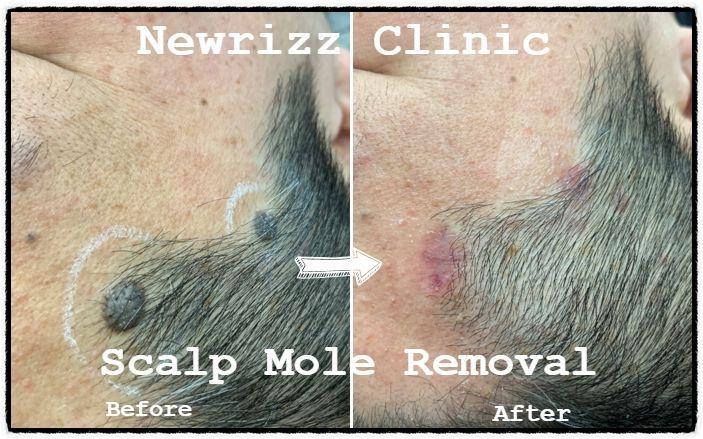
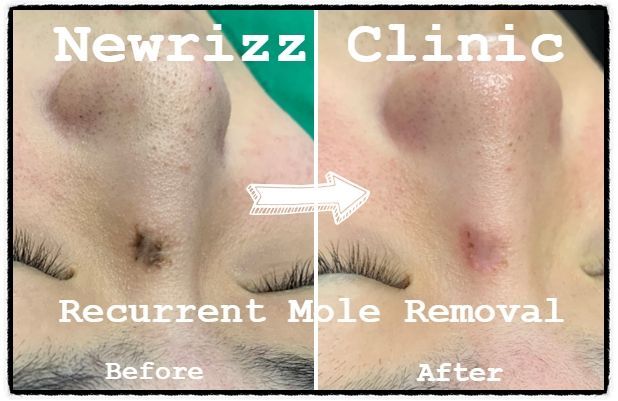
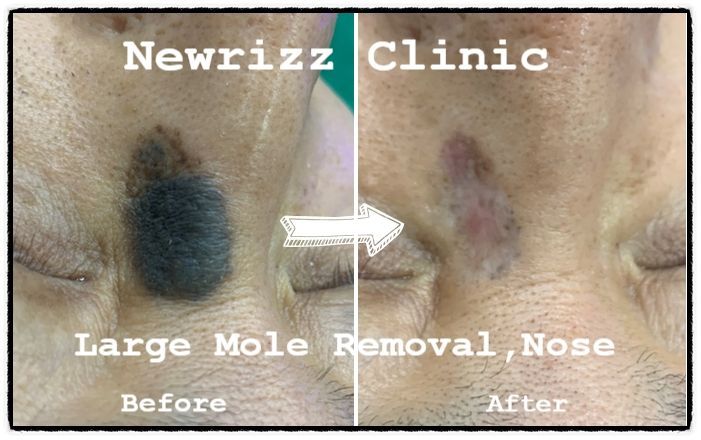
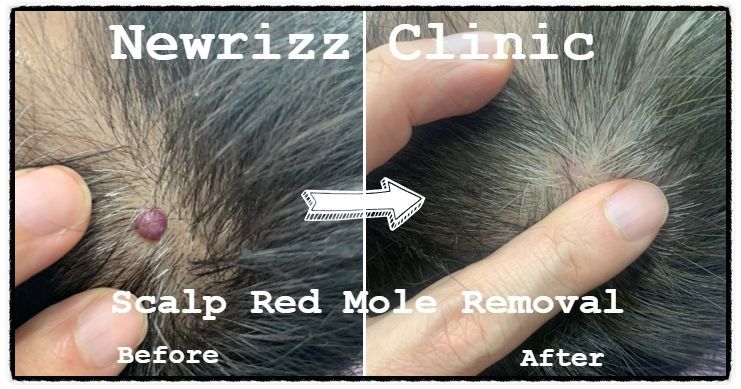
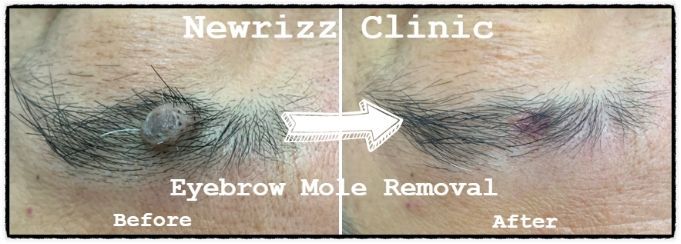
Hairy mole removal in Seoul is a specialized dermatology procedure designed to safely remove moles that contain visible hair growth while achieving the best possible cosmetic outcome. At NewRizz Skin Clinic, hairy moles are carefully evaluated based on their size, depth, pigmentation, location, and hair follicle involvement before selecting the most appropriate treatment method. Depending on the characteristics of the lesion, treatment may include shave excision, surgical excision, laser-assisted treatment, or a combination approach. Hair-bearing moles are usually benign melanocytic nevi, but professional evaluation is recommended before removal. Hair growth within a mole is common and does not necessarily indicate a medical problem.
What Is a Hairy Mole?
A hairy mole is a mole that contains one or more hair follicles growing through the lesion. These hairs are often thicker, darker, and more noticeable than surrounding hair.
Hairy moles may be:
- Flat or raised
- Small or large
- Congenital or acquired
- Flesh-colored, brown, or black
- Located on the face or body
- Single or multiple
Many hairy moles are intradermal nevi or congenital melanocytic nevi. Excess hair growth is particularly common in congenital moles.
Why Do Some Moles Grow Hair?
Hair follicles can develop normally within mole tissue. Research and clinical observations show that some moles contain active hair follicles that continue producing terminal hairs throughout life. Hair growth alone is not considered a warning sign of skin cancer.
Why Remove a Hairy Mole?
Patients commonly seek removal because:
- Hair growth is cosmetically noticeable
- Daily shaving becomes difficult
- Repeated plucking causes irritation
- The mole catches on razors
- Facial symmetry is affected
- Makeup application becomes difficult
- Clothing causes friction
- Confidence is reduced
Facial hairy mole removal is one of the most frequently requested cosmetic mole procedures.
Common Areas Treated
Face
Hair-bearing moles commonly occur on:
- Nose
- Cheeks
- Chin
- Upper lip
- Forehead
- Jawline
Scalp
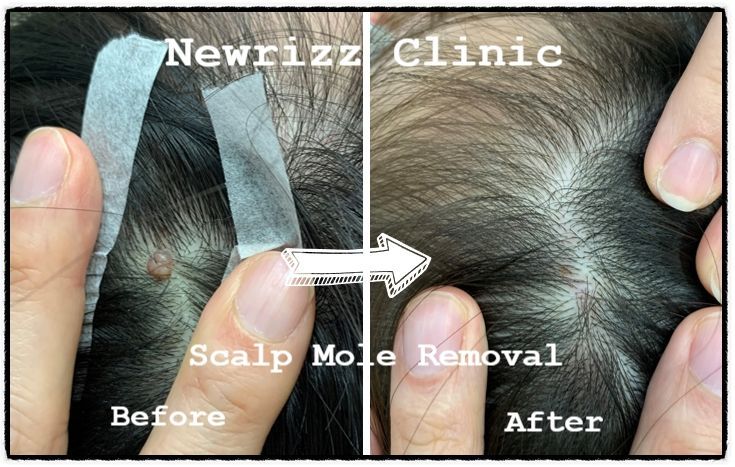
Scalp moles may become irritated during:
- Haircuts
- Hair brushing
- Hair styling
Neck
Neck moles often become irritated from:
- Shaving
- Jewelry
- Clothing collars
Body
Hairy moles may also appear on:
- Chest
- Back
- Shoulders
- Arms
- Abdomen
- Legs
Types of Hairy Moles
Intradermal Nevus
One of the most common hairy mole types.
Characteristics include:
- Raised appearance
- Flesh-colored or brown color
- Soft texture
- Visible hair growth
Compound Nevus
Features include:
- Slight elevation
- Pigmentation
- Hair growth in some cases
- Well-defined borders
Congenital Hairy Nevus
Present at birth or develops shortly afterward.
Characteristics may include:
- Larger size
- Dark pigmentation
- Dense hair growth
- Deeper skin involvement
Congenital hairy nevi often require individualized treatment planning. Surgical excision is commonly considered the standard treatment for larger congenital lesions.
How Hairy Moles Are Evaluated
At NewRizz Skin Clinic, every mole undergoes detailed examination before treatment.
Assessment may include:
- Clinical evaluation
- Mole size measurement
- Pigmentation assessment
- Hair follicle evaluation
- Depth analysis
- Medical history review
- Treatment planning
Certain lesions may require pathology examination when clinically indicated.
Hairy Mole Removal Methods
Shave Excision
Shave excision is commonly used for raised hairy moles.
Benefits include:
- Quick procedure
- No stitches in many cases
- Fast recovery
- Excellent cosmetic outcomes
- Minimal downtime
Shave excision is frequently used for elevated benign nevi but may carry a higher recurrence risk if deeper mole cells remain.
Surgical Excision
Surgical excision is often recommended for:
- Deep hairy moles
- Large lesions
- Congenital hairy nevi
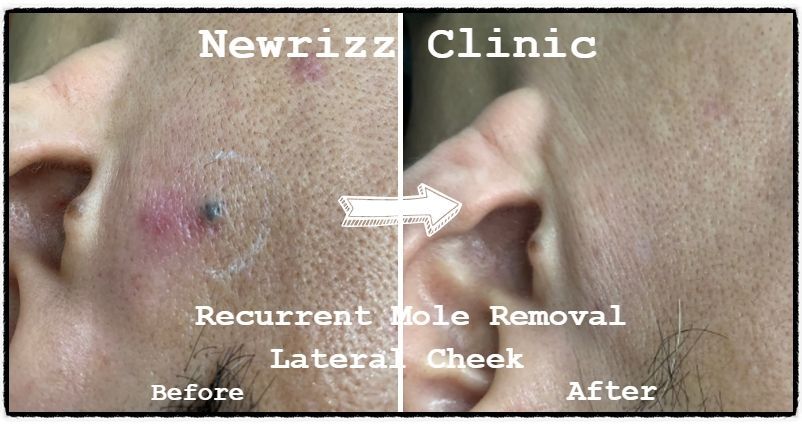
- Recurrent moles
- Suspicious pigmented lesions
Benefits include:
- Complete removal
- Hair follicle removal
- Pathology testing
- Lower recurrence risk
- Definitive treatment
Surgical excision remains the primary treatment for many congenital and deeper hairy nevi.
Laser-Assisted Treatment
Laser treatment may be used in selected cases for cosmetic refinement or superficial pigmentation reduction.
However, deeper mole cells and hair follicles may extend beyond the depth reached by laser treatment alone. For larger congenital hairy nevi, surgical removal is often preferred.
Will Hair Grow Back After Mole Removal?
Hair regrowth depends on:
- Treatment method
- Hair follicle depth
- Completeness of removal
- Mole type
Hair follicles located deeper than the mole may continue producing hair even after partial mole removal. Complete surgical excision generally offers the greatest likelihood of removing both the mole and associated follicles.
Recovery After Hairy Mole Removal
Recovery depends on:
- Mole size
- Mole depth
- Hair follicle involvement
- Treatment method
- Treatment location
Patients may experience:
- Mild redness
- Temporary swelling
- Small scabs
- Mild tenderness
- Temporary discoloration
Most patients return to normal activities shortly after treatment.
Can Hairy Moles Grow Back?
Recurrence depends on:
- Mole depth
- Removal technique
- Residual mole cells
- Hair follicle involvement
Shave removal may allow some mole cells to remain, which can lead to recurrence. Surgical excision generally provides the lowest recurrence rate.
Hairy Mole Removal for International Patients
Many international patients travel to Seoul for cosmetic mole removal because treatment is efficient, minimally invasive, and often available during a short trip.
NewRizz Skin Clinic welcomes patients seeking:
- Facial hairy mole removal
- Congenital hairy nevus treatment
- Cosmetic mole excision
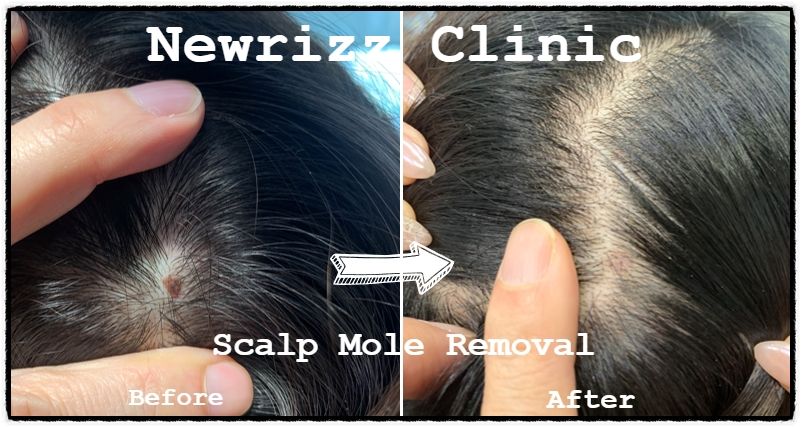
- Scalp mole removal
- Multiple mole removal
- Scar-conscious dermatology procedures
Many patients can receive consultation and treatment during the same visit.
Why Choose NewRizz Skin Clinic?
NewRizz Skin Clinic provides advanced hairy mole removal with a focus on safety, precision, and cosmetic excellence.
Patients benefit from:
- Expert mole assessment
- Advanced dermatology technology
- Surgical excision expertise
- Personalized treatment plans
- Scar-conscious techniques
- Pathology coordination when needed
- International patient support
- Modern dermatology care in Seoul
Frequently Asked Questions
What is a hairy mole?
A hairy mole is a mole that contains active hair follicles producing visible hair growth through the lesion.
Are hairy moles dangerous?
Most hairy moles are benign. Hair growth alone is not considered a sign of skin cancer. However, changing moles should always be evaluated by a dermatologist.
Why does my mole grow thick hair?
Hair follicles located within the mole continue producing hair, often resulting in darker and thicker hairs than surrounding skin.
What is the best treatment for a hairy mole?
Treatment depends on the mole's size and depth. Surgical excision and shave excision are among the most common options.
Can a hairy mole be removed with laser treatment?
Some lesions may benefit from laser-assisted treatment, but deeper moles and hair follicles often require surgical removal.
Will the hair disappear after mole removal?
In many cases yes, especially when the associated hair follicles are removed during treatment. Hair regrowth depends on follicle depth and treatment method.
Will there be a scar after hairy mole removal?
Any mole removal procedure may leave a scar, but scar-conscious techniques are used to achieve the best cosmetic outcome.
Can removed hairy moles be tested?
Yes. Tissue obtained through surgical excision can be submitted for pathology evaluation when medically indicated.
Can hairy moles grow back?
Some moles may recur if residual mole cells remain. Surgical excision generally provides the lowest recurrence risk.
Can international patients receive same-day treatment?
Yes. Many international patients can receive consultation and treatment during the same visit depending on the lesion and treatment plan.