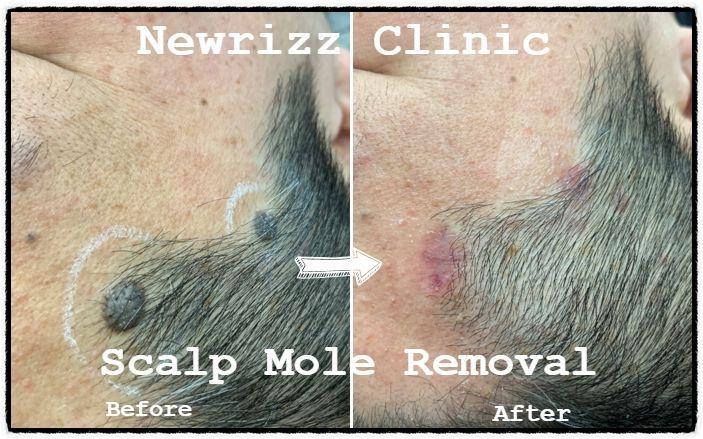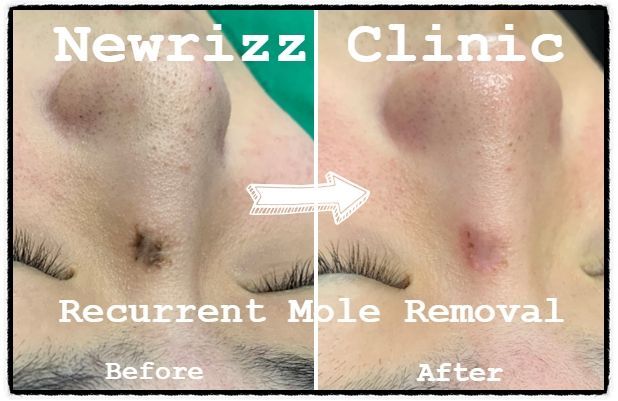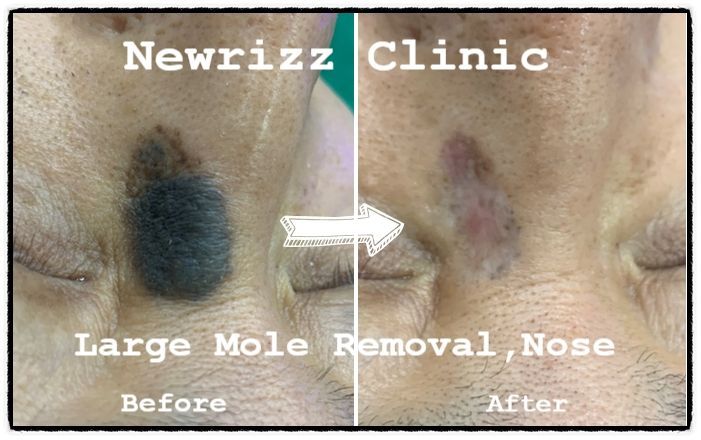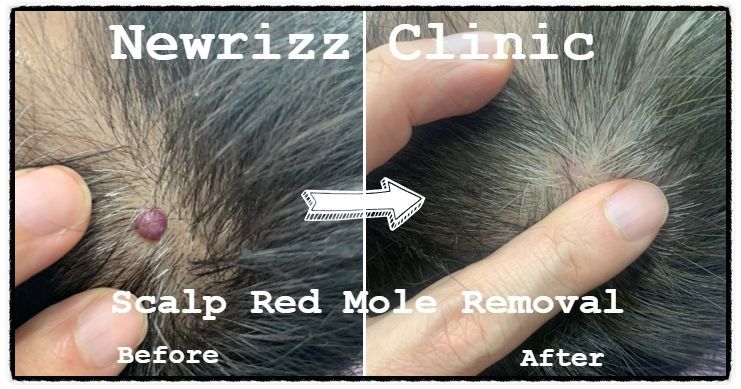
Mole Types | Jamsil NewRizz Skin Clinic Seoul
Moles are common skin growths that vary in color, size, shape, depth, and appearance. The most common mole types include junctional moles, compound moles, intradermal moles, congenital moles, raised moles, flat moles, blue nevi, and atypical moles. At NewRizz Skin Clinic in Seoul, each mole is carefully evaluated to determine its type, depth, cosmetic impact, and the most appropriate removal method, including laser mole removal, shave excision, or surgical excision. Common acquired moles are generally classified as junctional, compound, or intradermal nevi based on where pigment cells are located within the skin.
Understanding Different Types of Moles
Not all moles are the same. Some remain flat throughout life, while others become raised or develop hair. Certain mole types are present at birth, while others appear gradually during childhood and adulthood.
Identifying the mole type is important because treatment methods, recurrence risk, cosmetic outcomes, and pathology recommendations can vary significantly.
Junctional Moles
Junctional moles are flat pigmented moles located near the junction between the epidermis and dermis.
Characteristics include:
- Flat appearance
- Uniform color
- Brown to dark brown pigmentation
- Smooth surface
- Well-defined borders
These are among the most common flat moles and often respond well to laser treatment when appropriate.
Compound Moles
Compound moles contain pigment cells in both the epidermis and dermis.
Characteristics include:
- Slightly raised appearance
- Brown coloration
- Uniform pigmentation
- Rounded shape
- Sometimes hairy
Many common facial moles belong to this category.
Intradermal Moles
Intradermal moles are among the most common raised moles seen in adults.
Characteristics include:
- Raised or dome-shaped appearance
- Skin-colored, tan, or light brown
- Often contain hair
- Soft texture
- Long-standing stability
These moles often require shave excision or surgical removal rather than laser treatment alone.
Congenital Moles
Congenital moles are present at birth or develop shortly thereafter.
They may be classified as:
- Small congenital moles
- Medium congenital moles
- Large congenital moles
- Giant congenital moles
- Hairy congenital moles
Treatment recommendations depend on size, location, appearance, and patient goals.
Acquired Moles
Acquired moles develop after birth and commonly appear during childhood and adolescence.
Characteristics include:
- Gradual development
- Various colors
- Flat or raised appearance
- Single or multiple lesions
- Common facial and body locations
Most adult moles belong to this category.
Raised Moles
Raised moles may be:
- Compound moles
- Intradermal moles
- Congenital moles
Patients often seek removal because raised moles:
- Catch on clothing
- Interfere with shaving
- Become irritated
- Are cosmetically noticeable
Customized treatment is often necessary to minimize recurrence and optimize cosmetic results.
Flat Moles
Flat moles usually include:
- Junctional nevi
- Early acquired nevi
- Pigmented lesions
These lesions are often treated with laser technology when clinically appropriate.
Blue Nevus
Blue nevi are less common moles that appear blue, gray, or blue-black because pigment is located deeper within the skin.
Characteristics include:
- Blue coloration
- Well-defined borders
- Stable appearance
- Usually solitary lesions
Because they can resemble other pigmented lesions, professional evaluation is important.
Atypical Moles (Dysplastic Nevi)
Atypical moles may have:
- Irregular borders
- Uneven pigmentation
- Larger size
- Asymmetry
- Variable coloration
These moles often require closer monitoring and, in some cases, removal for diagnostic evaluation.
Hairy Moles
Hair-bearing moles commonly occur in:
- Intradermal nevi
- Compound nevi
- Congenital nevi
Hair growth itself does not necessarily indicate a medical problem, but many patients choose removal for cosmetic reasons.
Common Mole Locations
Moles frequently appear on:
- Forehead
- Nose
- Eyelids
- Cheeks
- Chin
- Neck
- Scalp
- Chest
- Back
- Arms
- Legs
Treatment recommendations vary depending on location and cosmetic considerations.
Mole Removal Based on Mole Type
Laser Mole Removal
Often suitable for:
- Flat moles
- Superficial moles
- Selected pigmented lesions
- Cosmetic facial moles
Shave Excision
Often suitable for:
- Raised moles
- Intradermal moles
- Compound moles
- Hairy moles
Surgical Excision
Often recommended for:
- Deep moles
- Large moles
- Recurrent moles
- Suspicious lesions
- Congenital moles
The most appropriate treatment depends on the mole type and clinical evaluation.
Why Accurate Mole Diagnosis Matters
Accurate diagnosis helps determine:
- Treatment method
- Recurrence risk
- Cosmetic outcomes
- Need for pathology testing
- Recovery expectations
- Long-term monitoring
At NewRizz Skin Clinic, every mole is carefully assessed before treatment to ensure safe and effective management.
Why Choose NewRizz Skin Clinic?
NewRizz Skin Clinic provides comprehensive mole diagnosis and removal services for patients seeking safe, precise, and cosmetically focused treatment.
Patients benefit from:
- Expert mole assessment
- Advanced laser technology
- Surgical mole removal options
- Personalized treatment plans
- Scar-conscious techniques
- International patient support
- Modern dermatology care in Seoul
Frequently Asked Questions
What are the most common types of moles?
The most common mole types are junctional moles, compound moles, intradermal moles, congenital moles, and acquired moles.
What is the difference between a flat mole and a raised mole?
Flat moles are usually located closer to the skin surface, while raised moles extend deeper into the dermis and protrude above the skin.
Are raised moles more dangerous than flat moles?
Not necessarily. The appearance alone does not determine risk. Changes in size, shape, color, or symptoms are more important factors.
What is an intradermal mole?
An intradermal mole is a raised, often dome-shaped mole located primarily within the dermis.
What is a congenital mole?
A congenital mole is present at birth or develops shortly after birth.
Can flat moles become raised?
Yes. Many moles naturally evolve from flat junctional nevi to raised compound or intradermal nevi over time.
Which mole types are best treated with laser removal?
Flat and superficial moles are often the best candidates for laser treatment, depending on individual evaluation.
Which mole types require surgical excision?
Deep, large, congenital, recurrent, or suspicious moles may require surgical excision.
Can all mole types be removed?
Most benign mole types can be removed using laser treatment, shave excision, or surgical excision depending on their characteristics.
Can international patients receive mole consultation and treatment on the same day?
Yes. Many international patients can receive consultation and treatment during the same visit depending on the mole type and treatment plan.