Large Mole Removal on Ear in Seoul |
Jamsil NewRizz Skin Clinic
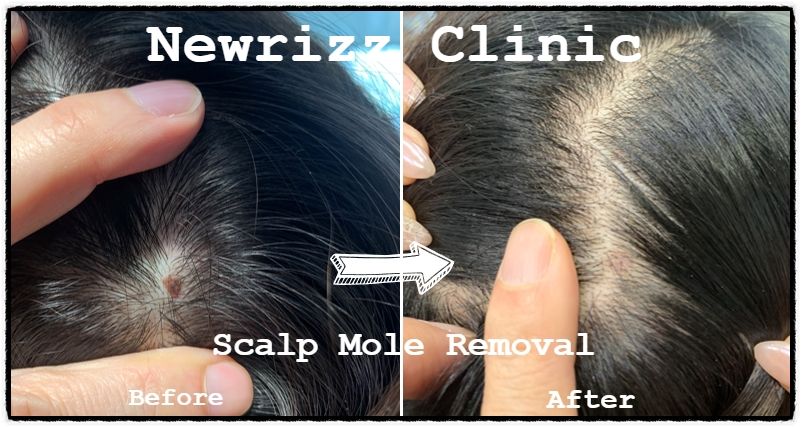
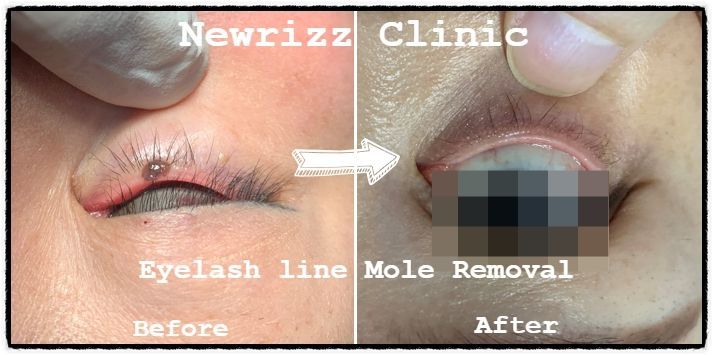
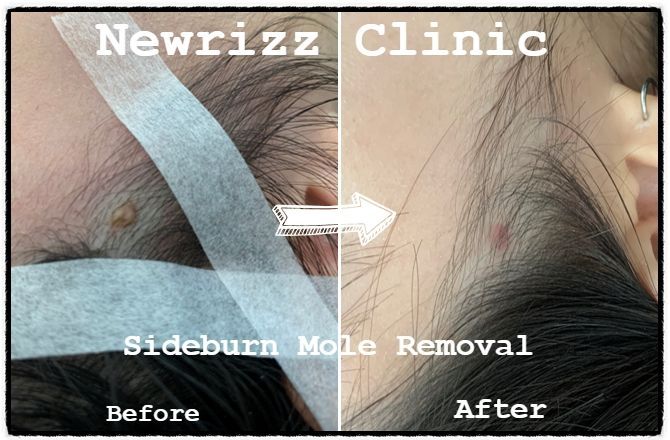
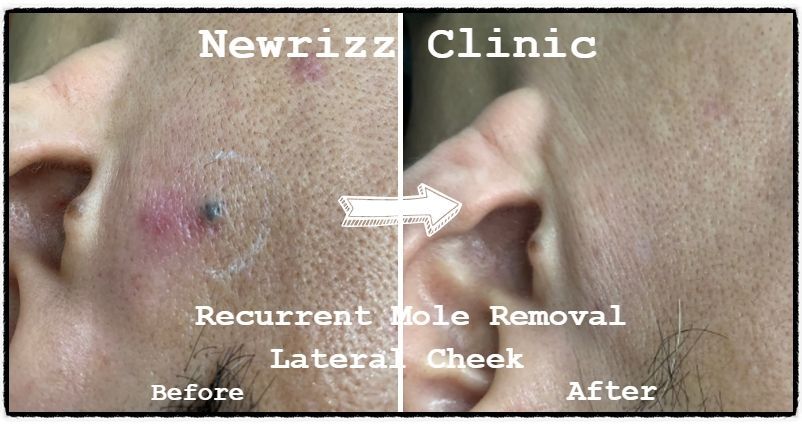
Large mole removal on the ear requires specialized treatment because the ear contains thin skin, cartilage, and limited tissue for reconstruction. Complete removal often requires precise surgical techniques to preserve ear shape and reduce visible scarring.
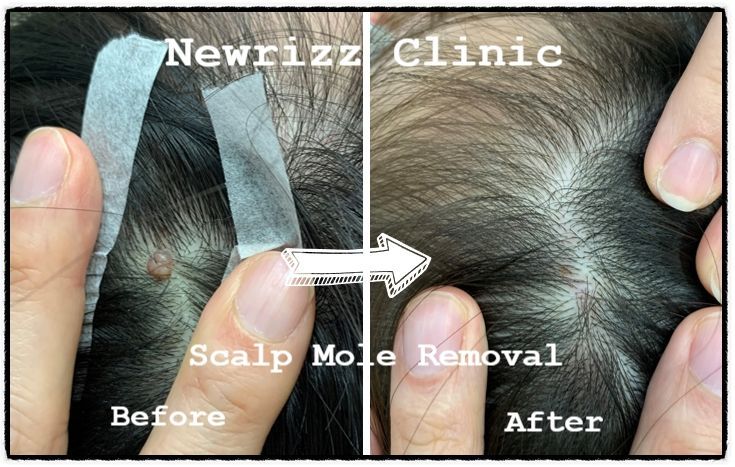
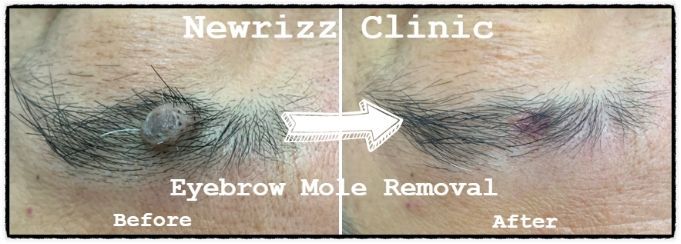
Newrizz Skin Clinic in Seoul provides personalized treatment for large ear moles, congenital nevi, raised moles, and pigmented lesions using cosmetic-focused surgical planning and advanced scar management protocols.
Large Mole Removal on Ear in Seoul
Large moles on the ear can be particularly challenging to remove due to the ear's complex anatomy, thin skin, and visible location. Whether the mole is located on the earlobe, helix, antihelix, tragus, or behind the ear, treatment requires careful planning to achieve complete removal while preserving the natural shape of the ear.
At Newrizz Skin Clinic in Jamsil, Seoul, large ear moles are evaluated individually to determine the safest and most cosmetically appropriate treatment approach. Depending on the mole's size, depth, and location, treatment may involve surgical excision, staged removal, laser treatment, or a combination approach to minimize visible scarring while maintaining natural ear contours.
Why Ear Moles Require Special Attention
The ear is one of the most visible parts of the face and contains delicate cartilage structures beneath thin skin.
Large ear moles may:
- Continue growing over time
- Become irritated by masks or glasses
- Cause cosmetic concerns
- Affect ear symmetry
- Develop recurrent inflammation
- Require pathological evaluation
Because the ear has limited excess skin, treatment planning is critical to achieve the best cosmetic outcome.
Types of Ear Moles We Treat
Large Raised Ear Moles
These protrude above the skin surface and may become irritated from:
- Eyeglasses
- Earphones
- Helmets
- Hair grooming
Congenital Ear Moles
Present since birth, congenital moles can enlarge gradually over time and often require specialized removal planning.
Pigmented Ear Moles
Darkly pigmented lesions may be treated for cosmetic reasons or because of changes in appearance.
Earlobe Moles
Moles located on the earlobe often allow more flexibility for surgical closure because of greater soft tissue volume.
Cartilage-Area Moles
Moles located on the helix, antihelix, or upper ear may require advanced surgical techniques to preserve ear contours.
Signs You Should Consider Ear Mole Removal
You may benefit from treatment if your mole:
- Is increasing in size
- Changes color
- Develops irregular borders
- Becomes painful
- Bleeds repeatedly
- Gets caught on clothing or accessories
- Causes cosmetic concerns
- Interferes with glasses or earphones
Any changing mole should be evaluated by a qualified physician.
Treatment Options for Large Ear Moles
Surgical Excision
For large or deep ear moles, surgical excision often provides the most definitive treatment.
Benefits include:
- Complete removal
- Pathological examination if needed
- Lower recurrence risk
- Precise contour control
Large and deep moles often require excision rather than superficial treatment.
Staged Excision
Very large congenital moles may occasionally benefit from staged removal to preserve normal ear anatomy.
Laser Mole Removal
Selected superficial pigmented lesions may be treated with laser technologies.
Laser treatment may be appropriate for:
- Flat lesions
- Cosmetic improvement
- Residual pigmentation
However, deeper lesions often require surgical treatment for complete removal.
Combination Treatment
Some patients benefit from a combination of:
- Surgical removal
- Laser resurfacing
- Scar management
- Pigment correction
Scar Considerations for Ear Mole Removal
The ear is a unique location because scar behavior differs from other facial areas.
Potential concerns include:
- Visible scars
- Cartilage distortion
- Pigment changes
- Hypertrophic scars
- Keloid formation
The ear is considered one of the higher-risk locations for keloid development, making careful surgical planning especially important.
At Newrizz Skin Clinic, treatment planning focuses on:
- Strategic incision placement
- Tension reduction
- Cosmetic closure techniques
- Post-procedure scar management
Recovery After Ear Mole Removal
Recovery varies depending on:
- Mole size
- Depth
- Treatment method
- Individual healing characteristics
Most patients experience:
First Week
- Mild swelling
- Temporary redness
- Minimal discomfort
Weeks 2–4
- Improved healing
- Suture removal if necessary
- Reduced swelling
Several Months
- Scar maturation
- Continued remodeling
- Cosmetic improvement
Most mole removal wounds heal within several weeks, while scar maturation may continue for months.
Benefits of Professional Ear Mole Removal
Improved Appearance
Removal can improve facial balance and ear aesthetics.
Reduced Irritation
Eliminates friction caused by glasses, masks, earbuds, and hair products.
Diagnostic Evaluation
Removed tissue can be examined when clinically indicated.
Lower Recurrence Risk
Complete excision minimizes the likelihood of regrowth.
Long-Term Confidence
Many patients feel more comfortable with their appearance following treatment.
Why Choose Newrizz Skin Clinic?
Newrizz Skin Clinic is recognized for advanced mole removal procedures and cosmetic-focused dermatology treatments in Seoul.
Advantages include:
- Expertise in large mole removal
- Cosmetic surgical planning
- Advanced scar management
- Personalized treatment strategies
- International patient support
- Modern dermatology technology
- Natural-looking outcomes
The clinic provides individualized treatment plans based on mole characteristics, skin type, and aesthetic goals.
Frequently Asked Questions
Can large ear moles be completely removed?
Yes. Many large ear moles can be completely removed through surgical excision. The specific approach depends on the mole's size, depth, and location on the ear.
Will ear mole removal leave a scar?
Any mole removal procedure can result in a scar. However, careful surgical planning and proper wound care help minimize scar visibility and optimize cosmetic outcomes.
Is ear mole removal painful?
The procedure is typically performed under local anesthesia. Most patients experience minimal discomfort during treatment and mild soreness afterward.
Can ear moles grow back after removal?
Recurrence is uncommon after complete excision. However, residual mole cells may occasionally cause partial regrowth in some cases.
Are large congenital ear moles removable?
Yes. Many congenital ear moles can be treated successfully, although larger lesions may require more complex treatment planning.
Is the ear prone to keloid scars?
Yes. The ear is considered one of the more common locations for keloid formation, particularly in susceptible individuals. Patients with a history of abnormal scarring should discuss this during consultation.
How long does ear mole removal take?
Most procedures take approximately 20 to 60 minutes depending on the size and complexity of the lesion.
When can I wear earphones again?
Most patients can resume wearing earphones after sufficient healing has occurred. Your doctor will provide individualized guidance based on the treatment area.
Can ear moles be treated with lasers?
Some superficial lesions may be suitable for laser treatment. Larger or deeper moles often require surgical excision for complete removal.
Can international patients receive treatment in Seoul?
Yes. Newrizz Skin Clinic regularly treats international patients seeking mole removal, scar revision, and cosmetic dermatology procedures in Korea.